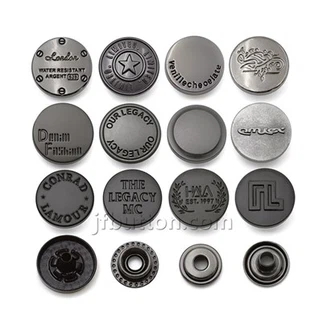
Snap buttons are among the most widely used fastening components in modern garment manufacturing.Among the various options available, metal snap buttons and plastic snap buttons are the two most commonly used categories. Although they serve the same basic fastening function, they differ significantly in material properties, durability, weight, appearance, manufacturing cost, and ideal applications.
For garment manufacturers, fashion brands, sourcing managers, and OEM buyers, understanding these differences is essential when developing products for different markets. For example, a heavy-duty denim jacket requires a fastening solution that can withstand repeated use, while baby clothing often prioritizes lightweight, rust-free, and skin-friendly materials. Making the right choice not only improves product quality but also strengthens brand reputation and customer satisfaction.
This guide provides a comprehensive comparison of metal vs plastic snap buttons, covering their materials, advantages, limitations, manufacturing processes, customization options, and the industries where each performs best. Whether you are sourcing custom snap buttons for a new apparel collection or looking for a reliable China snap button manufacturer, this article will help you make an informed decision based on your product requirements and business goals.
What Are Metal Snap Buttons?
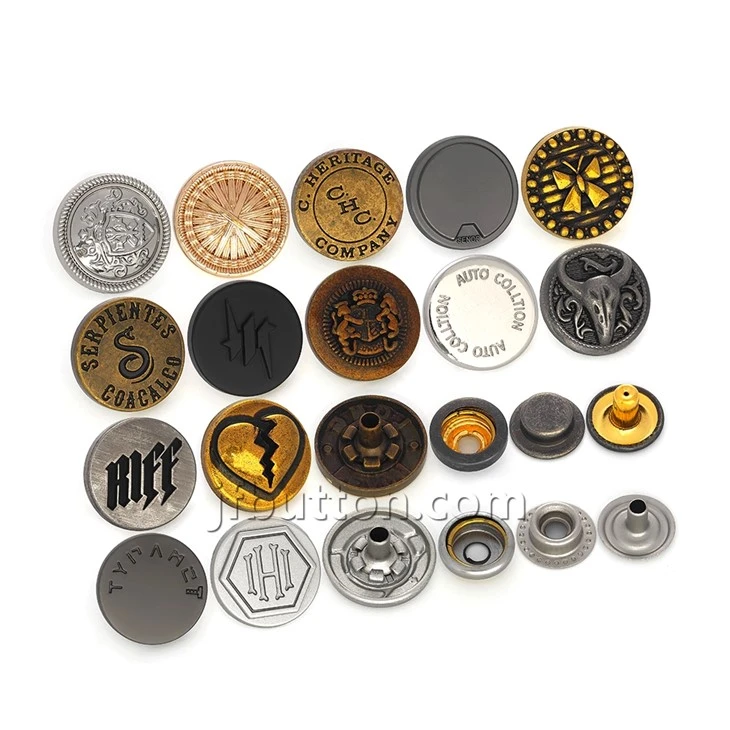
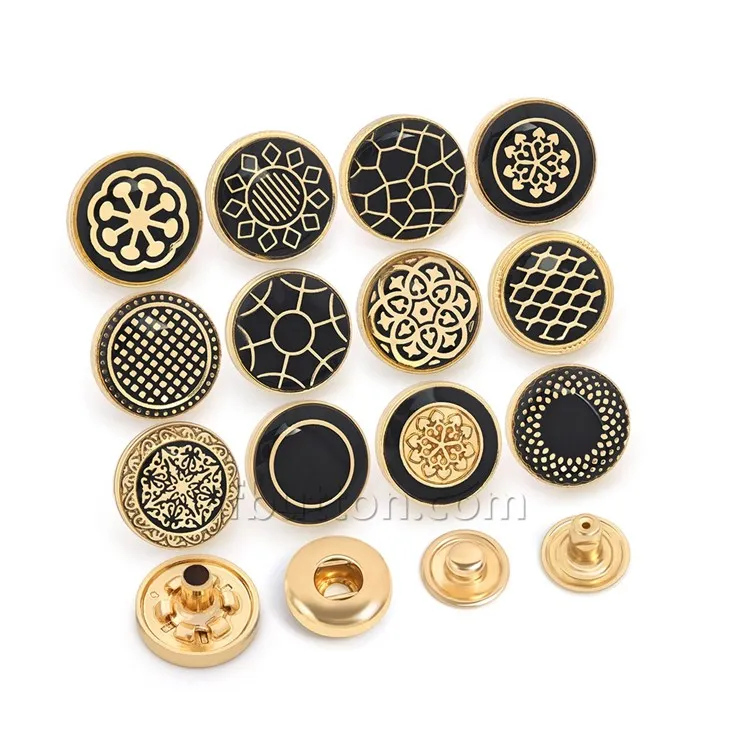
Metal snap buttons are reusable four-part metal fasteners that provide strong, durable closures for garments, bags, and accessories. They are commonly used in products that require high strength, long-lasting performance, and a premium finish.

1. The Basic Structure of a Metal Snap Button
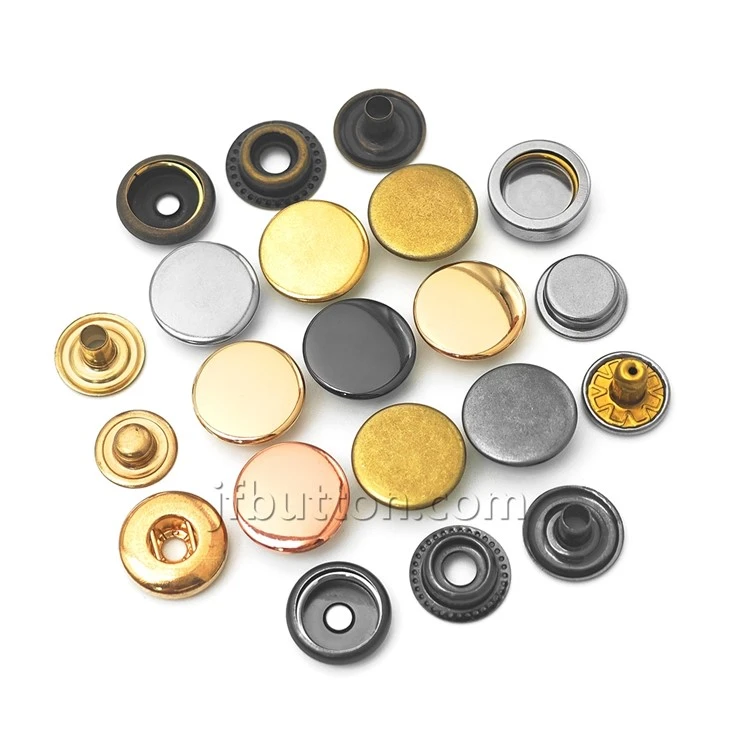
A standard metal snap button consists of four precision-engineered components that work together to create a secure fastening system:
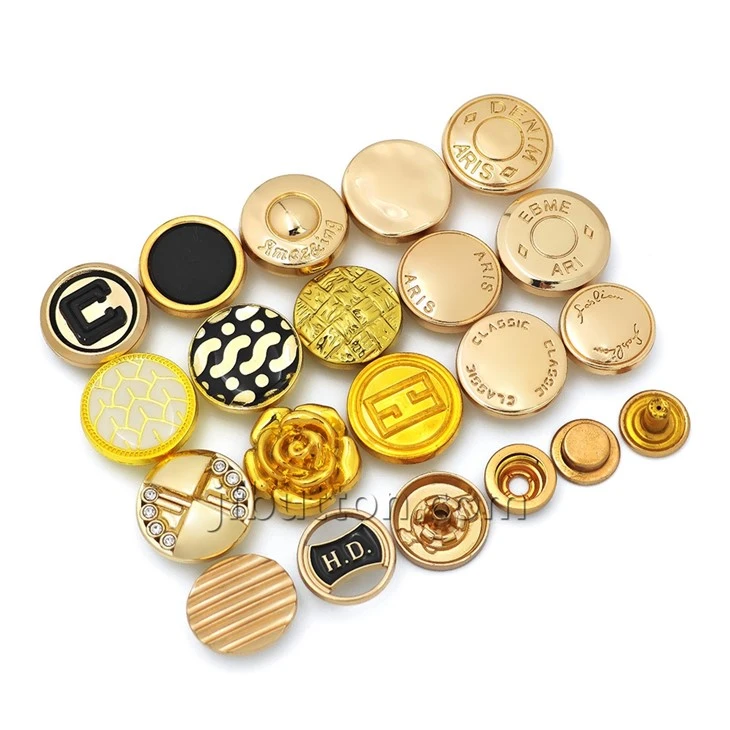
- Cap – The visible decorative top, which can feature custom logos, embossed patterns, or engraved branding.
- Socket – The female component that receives the stud.
- Stud – The male component that locks into the socket to create the fastening action.
- Post – The connecting piece that secures the button to the fabric during installation.
2. Common types of metal snap buttons
Brass snap button: Brass is one of the most popular materials for premium snap buttons due to its excellent corrosion resistance, durability, and attractive finish. It is commonly used for high-end fashion, denim, and luxury garments.
Zinc Alloy snap button:Zinc alloy offers outstanding design flexibility because it can be die-cast into complex shapes and decorative styles. It is widely used for fashion apparel and customized snap buttons.
Stainless Steel snap button: Stainless steel provides exceptional strength and corrosion resistance, making it ideal for outdoor apparel, marine products, medical textiles, and industrial workwear.
3. Advantages of Metal Snap Buttons
Metal snap buttons remain the preferred choice for many apparel manufacturers because they offer several important benefits.
- Superior Durability
Metal snaps maintain their fastening performance even after thousands of opening and closing cycles, making them ideal for frequently used garments.
- Strong Holding Force
Compared with plastic alternatives, metal snap buttons generally provide greater pull strength and are less likely to loosen under tension.
- Premium Appearance
Metal finishes create a high-quality, luxury look that enhances the perceived value of garments and accessories.
What Are Plastic Snap Buttons?
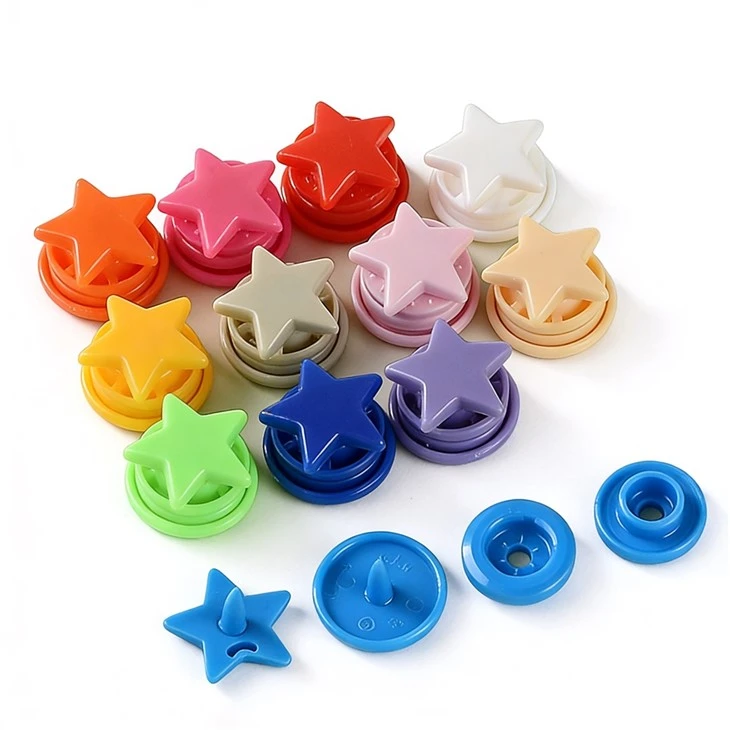
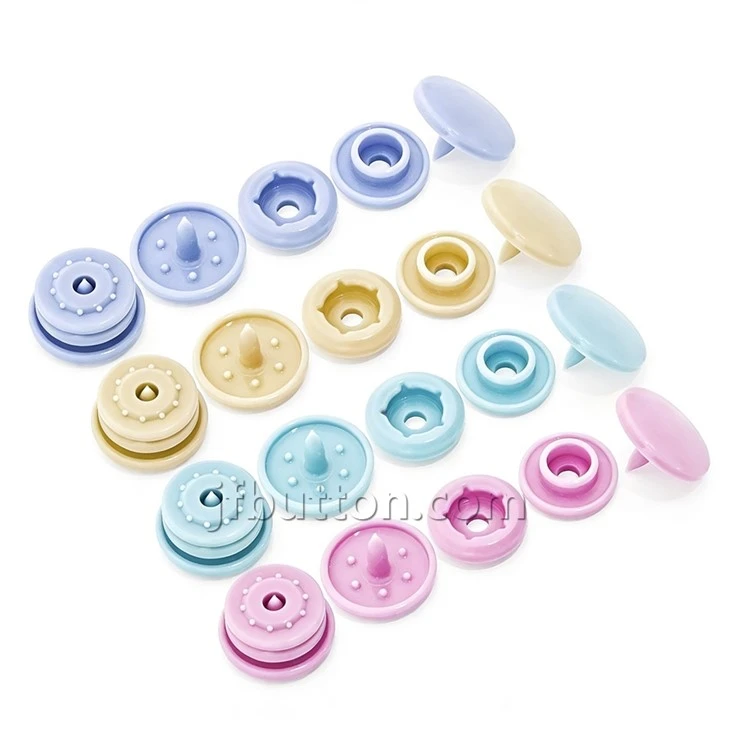
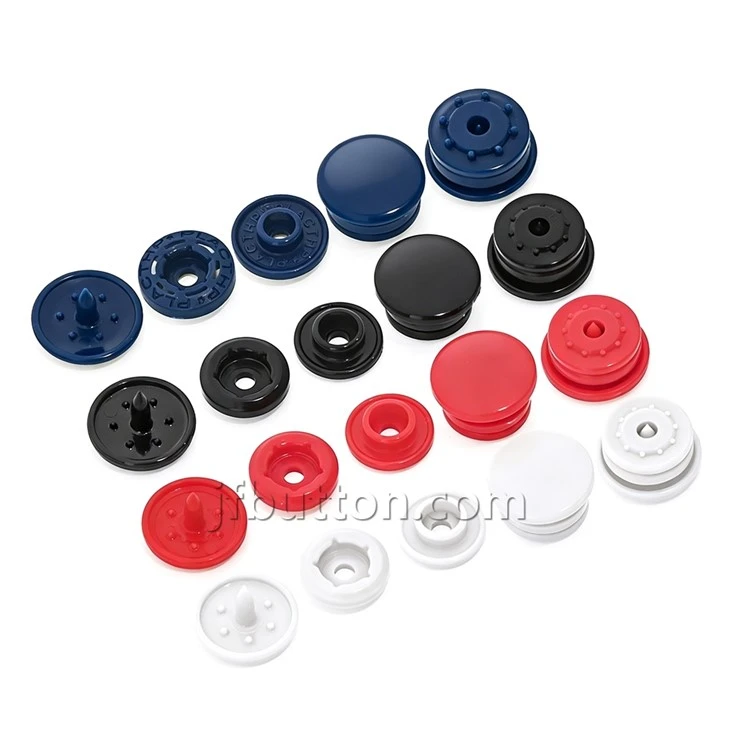
Plastic snap buttons are lightweight, rust-resistant, and highly customizable, making them an excellent choice for baby apparel, sportswear, medical textiles, and lightweight fashion garments. They offer superior color flexibility and moisture resistance, while metal snap buttons remain the better option for applications requiring maximum strength and durability.
1.Common types of plastic snap buttons
Polyoxymethylene (POM) snap button:POM, also known as acetal, is one of the most widely used materials for plastic snap buttons because of its excellent mechanical strength and wear resistance.
ABS (Acrylonitrile Butadiene Styrene) snap button:ABS offers good impact resistance and is easy to color, making it suitable for decorative fashion applications.
Nylon (PA) snap button: Nylon snap buttons are known for their flexibility and high tensile strength.
Resin snap button: Resin materials are often selected for decorative or specialty snap buttons where unique colors or visual effects are required.
2.Advantages of Plastic Snap Buttons
Plastic snap buttons offer several benefits that make them the preferred choice for specific garment categories.
- Lightweight Construction
Plastic snaps add minimal weight to garments, improving wearing comfort and making them suitable for lightweight fabrics.
- Rust and Corrosion Resistance
Unlike metal fasteners, plastic snap buttons do not rust, making them ideal for garments exposed to moisture, frequent washing, or humid environments.
- Wide Range of Colors
Plastic materials can be produced in virtually any color, allowing brands to match seasonal collections, children's clothing, or fashion trends without additional plating.
- Skin-Friendly Performance
Plastic snap buttons generally have smooth edges and low thermal conductivity, making them a comfortable option for garments worn directly against the skin, especially infant and children's apparel.
- Cost Efficiency
For high-volume production of lightweight garments, plastic snap buttons often provide a more economical fastening solution than metal alternatives.

Metal vs Plastic Snap Buttons: Key Differences
|
Comparison Factor |
Metal Snap Buttons |
Plastic Snap Buttons |
|
Primary Materials |
Brass, zinc alloy, stainless steel, aluminum |
POM (Acetal), ABS, nylon, resin |
|
Durability |
★★★★★ Excellent for long-term, heavy-duty use |
★★★☆☆ Suitable for light to medium-duty applications |
|
Holding Strength |
Strong fastening force; ideal for thick fabrics |
Moderate fastening force; best for lightweight fabrics |
|
Weight |
Heavier, providing a premium feel |
Lightweight and comfortable for everyday wear |
|
Corrosion Resistance |
Excellent when properly plated or made from stainless steel |
Naturally rust-proof and moisture-resistant |
|
Surface Finish Options |
Nickel, matte nickel, gold, antique brass, gunmetal, black nickel, PVD coating |
Solid colors, translucent colors, matte or glossy finishes |
|
Logo Customization |
Embossing, engraving, laser marking, custom molds |
Embossed logos, molded logos, printed designs (material dependent) |
|
Best Fabric Types |
Denim, canvas, leather, heavy cotton, workwear fabrics |
Cotton, knit fabrics, polyester, baby fabrics, lightweight textiles |
|
Typical Applications |
Denim jeans, jackets, uniforms, leather goods, bags, workwear, luxury apparel |
Baby clothing, sportswear, medical garments, rainwear, casual fashion |
|
Wash Performance |
Excellent resistance to repeated washing and daily wear |
Excellent moisture resistance; suitable for frequent laundering |
|
Environmental Conditions |
Suitable for outdoor, industrial, and heavy-use environments |
Ideal for humid environments and products exposed to moisture |
|
Cost |
Medium to high, depending on material and finish |
Generally lower production cost |
|
Recyclability |
Highly recyclable (especially brass and stainless steel) |
Depends on plastic material and local recycling facilities |
Which Snap Button Is Better for Different Garment Types?
Metal snap buttons are the preferred choice for heavy-duty garments, denim, workwear, leather goods, and premium fashion because they provide superior strength, durability, and a high-end appearance. Plastic snap buttons are better suited for lightweight apparel, baby clothing, sportswear, and moisture-resistant garments where comfort, color variety, and rust resistance are the primary considerations.
|
Garment Type |
Recommended Snap Button |
|
Denim Jeans |
⭐ Metal Snap Buttons |
|
Denim Jackets |
⭐ Metal Snap Buttons |
|
Leather Jackets |
⭐ Metal Snap Buttons |
|
Workwear & Industrial Uniforms |
⭐ Metal Snap Buttons |
|
Military & Tactical Apparel |
⭐ Metal Snap Buttons |
|
Outdoor & Camping Gear |
⭐ Metal Snap Buttons (Stainless Steel Preferred) |
|
Fashion Jackets & Coats |
⭐ Metal Snap Buttons |
|
Luxury Fashion Apparel |
⭐ Metal Snap Buttons |
|
Baby Clothing |
⭐ Plastic Snap Buttons |
|
Children's Wear |
⭐ Plastic Snap Buttons |
|
Sportswear |
⭐ Plastic Snap Buttons |
|
Medical Garments |
⭐ Plastic Snap Buttons |
|
Rainwear & Waterproof Clothing |
⭐ Plastic Snap Buttons |
|
Lightweight Shirts & Blouses |
⭐ Plastic Snap Buttons |
|
Casual Fashion Apparel |
⭐ Plastic Snap Buttons |
|
Traditional Garments (Thobe / Kandura / Abaya) |
⭐ Metal Snap Buttons (Premium Collections)⭐ Plastic Snap Buttons (Lightweight & Casual Styles) |
|
Handbags & Leather Accessories |
⭐ Metal Snap Buttons |
Factors to Consider Before Choosing Snap Buttons
The best snap button is determined by the garment's fabric, intended use, durability requirements, brand positioning, and production budget rather than by material alone.
1. Fabric Thickness and Weight
The thickness and weight of the fabric are among the first considerations when selecting snap buttons.
Heavy fabrics require stronger fastening systems that can withstand greater pulling force, while lightweight fabrics benefit from lighter fasteners that won't damage or distort the material.
Recommended Choices
|
Fabric Type |
Recommended Snap Button |
|
Denim |
Metal Snap Buttons |
|
Canvas |
Metal Snap Buttons |
|
Leather |
Metal Snap Buttons |
|
Wool Coats |
Metal Snap Buttons |
|
Cotton Shirts |
Plastic or Small Metal Snap Buttons |
|
Baby Fabrics |
Plastic Snap Buttons |
|
Lightweight Polyester |
Plastic Snap Buttons |
2. Intended Garment Application
Different garments have different performance requirements.
Consider how frequently the garment will be worn, washed, and opened or closed.
|
Garment Category |
Recommended Snap Button |
|
Denim Jeans |
Metal |
|
Workwear |
Metal |
|
Leather Goods |
Metal |
|
Outdoor Apparel |
Metal (Stainless Steel Preferred) |
|
Baby Clothing |
Plastic |
|
Sportswear |
Plastic |
|
Medical Apparel |
Plastic |
|
Casual Fashion |
Plastic or Metal (depending on design) |
3. Durability Requirements
One of the biggest differences between metal and plastic snap buttons is durability.
Ask yourself:
Will the garment be used daily?
Will it undergo industrial laundering?
Will it experience frequent opening and closing?
If the answer is yes, metal snap buttons are usually the better option because they offer:
- Higher pull strength
- Better wear resistance
- Longer service life
Plastic snap buttons perform well for garments that require moderate fastening strength and lightweight construction.
4. Washing and Environmental Conditions
Garments are exposed to different environments throughout their lifecycle.
Consider factors such as:
- Frequent machine washing
- Dry cleaning
- High humidity
- Outdoor exposure
- Saltwater environments
For outdoor workwear and marine applications, stainless steel snap buttons provide excellent corrosion resistance.
Plastic snap buttons are naturally rust-proof, making them ideal for garments regularly exposed to moisture.
5. Customization Requirements
If branding is important, choose a manufacturer with comprehensive OEM and ODM capabilities.
Common customization options include:
- Custom logo embossing
- Laser engraving
- Mold development
- Custom diameters
- Electroplating colors
- Matte or glossy finishes
- Decorative textures
- Custom packaging
An experienced China custom snap button manufacturer can recommend the most suitable material and finishing process based on your product specifications.
6. Safety and Compliance Standards
Certain industries have strict safety requirements.
For example:
- Baby clothing
- Children's products
- Medical textiles
- Protective apparel
Before placing bulk orders, confirm whether your supplier can meet applicable regulations and customer requirements, such as:
- Nickel-free finishes
- Lead-free materials
- OEKO-TEX® Standard 100 compliance (if required)
- CPSIA or REACH compliance (depending on the destination market)
Meeting these standards helps reduce compliance risks and improves buyer confidence.
7. Production Budget
Material selection directly affects production costs.
Generally:
- Plastic snap buttons are more economical for high-volume, lightweight garments.
- Zinc alloy metal snap buttons provide a balance between durability and cost.
- Brass and stainless steel snap buttons offer premium performance at a higher price point.
When evaluating costs, consider the total value rather than the unit price alone, including product lifespan, replacement rates, and customer satisfaction.
The ideal snap button is one that matches the garment's fabric, application, durability requirements, compliance standards, and brand positioning. Evaluating these factors before production helps manufacturers improve product performance, reduce sourcing risks, and optimize overall manufacturing costs.
There is no one-size-fits-all answer when comparing metal vs plastic snap buttons. The right choice depends on your garment's fabric, intended application, durability requirements, brand positioning, and budget. Metal snap buttons are ideal for heavy-duty apparel, denim, workwear, and premium fashion, while plastic snap buttons excel in lightweight garments, baby clothing, sportswear, and moisture-resistant applications.
Partnering with an experienced China custom snap button manufacturer can help you select the most suitable materials, finishes, and customization options to ensure both product quality and manufacturing efficiency.
Looking for custom snap button solutions? Contact kunshuo garment accessories today to discuss your OEM or ODM requirements. Our team is ready to help you develop high-quality snap buttons tailored to your brand and garment applications.