Snap button manufacturing is a precision process that combines material selection, mold engineering, forming, surface finishing, assembly, and quality inspection to produce durable fastening solutions for garments and accessories. Professional China snap button manufacturers--KUNSHUO integrate these processes to deliver consistent quality, OEM customization, and efficient large-scale production.
In the following sections, we'll take you inside a professional snap button factory in China--kunshuo and explore each stage of the manufacturing process-from raw materials to finished products-so you can better understand what defines a high-quality snap button and how to choose the right manufacturing partner for your business.
What Are Snap Buttons?
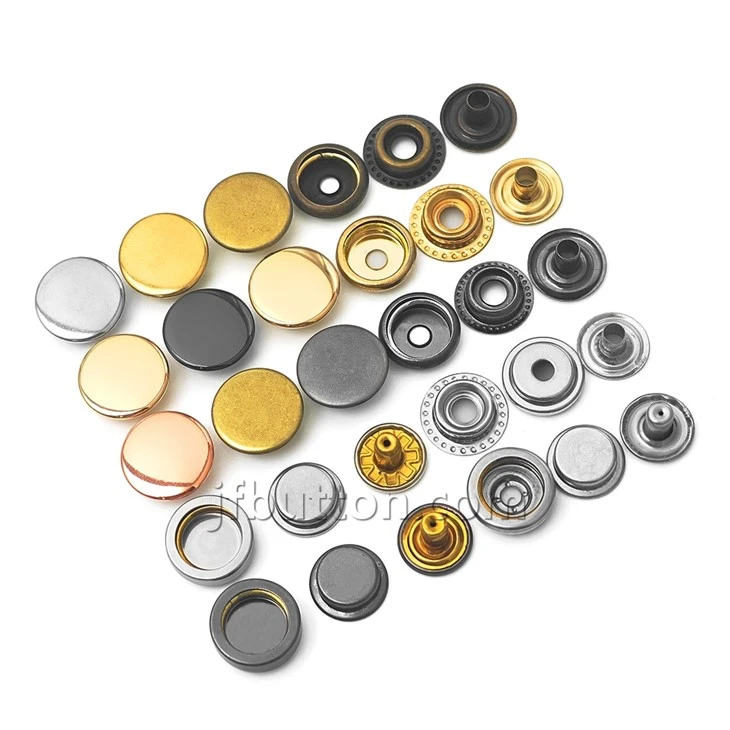
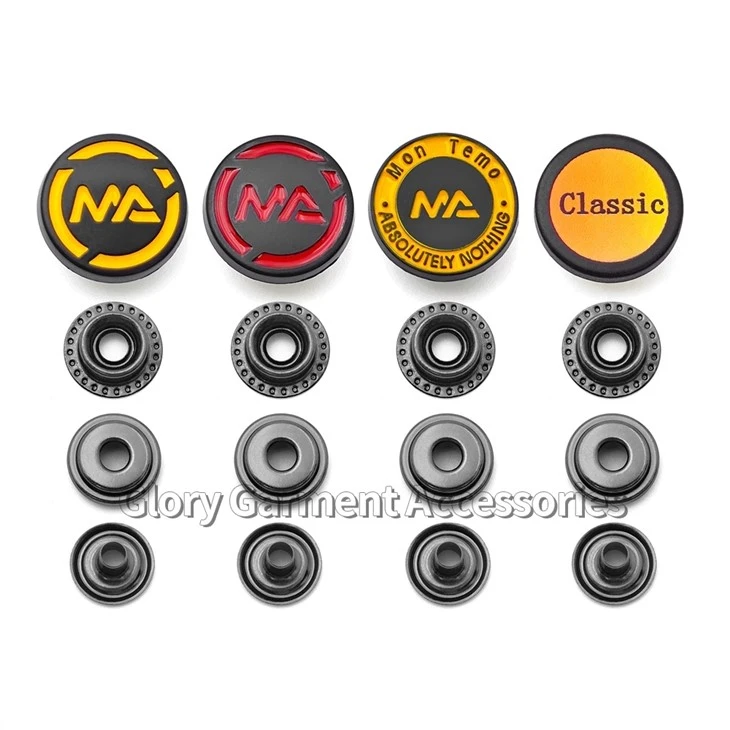
Snap buttons, also known as snap fasteners, press studs, or press buttons, are reusable four-part fastening components that connect fabrics through a press-lock mechanism. They are widely used in garments, bags, footwear, and accessories because they provide secure, durable, and easy-to-use closures.
Common Types of Snap Buttons
Professional manufacturers produce various types of snap buttons to meet different garment requirements.
Metal Snap Buttons
Made from brass, zinc alloy, stainless steel, or aluminum, metal snap buttons offer superior durability, strong holding force, and a premium appearance. They are commonly used in denim, workwear, leather goods, and luxury fashion.
Plastic Snap Buttons
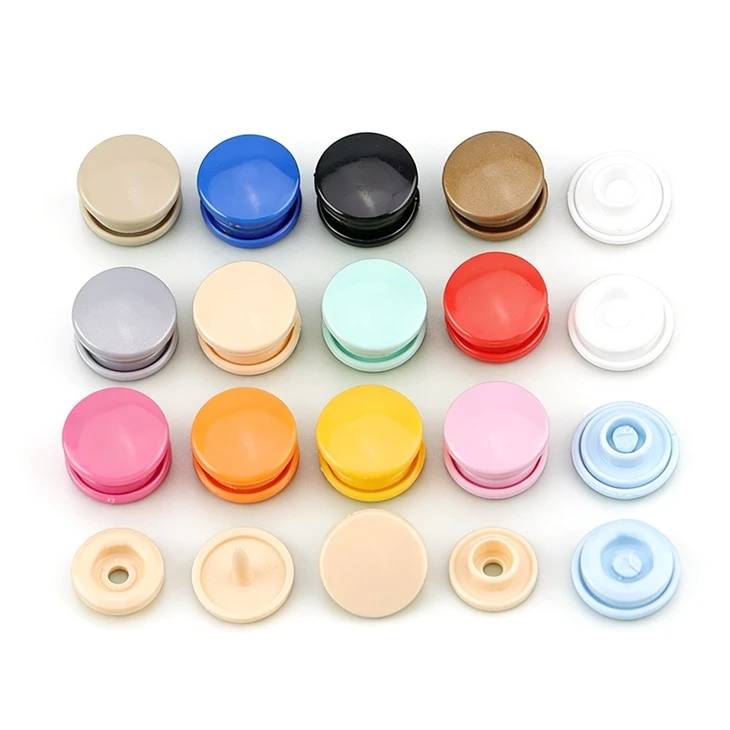
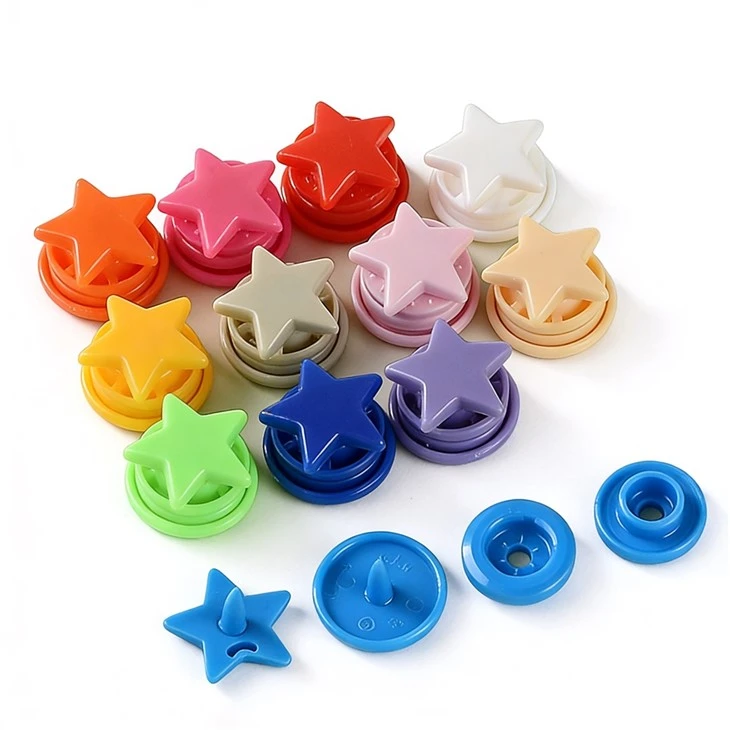
Manufactured from engineering plastics such as POM, ABS, or nylon, plastic snap buttons are lightweight, rust-resistant, and available in a wide range of colors. They are widely used in baby clothing, sportswear, and lightweight apparel.
Pearl Snap Buttons
Pearl snap buttons feature decorative resin or imitation pearl caps that combine the convenience of snap fasteners with an elegant appearance. They are especially popular in Western shirts and fashion garments.
Prong Snap Buttons
Prong snap buttons use pointed prongs instead of posts to attach directly to fabric, making installation easier for lightweight textiles and DIY projects.
Heavy-Duty Snap Fasteners
Designed for demanding applications, heavy-duty snap fasteners provide exceptional holding strength and durability. They are commonly used in workwear, outdoor equipment, tactical gear, marine products, and industrial textiles.



Step-by-Step Snap Button Manufacturing Process
The snap button manufacturing process includes material selection, mold development, forming, polishing, surface finishing, assembly, quality inspection, and packaging. Each step contributes to the durability, appearance, and reliability of the finished snap button.
Step 1: Raw Material Selection
The manufacturing process begins with selecting high-quality raw materials based on the intended application and customer requirements.
Common materials include:
Brass
Zinc alloy
Stainless steel
Aluminum
POM
ABS
Nylon
Before production, materials are inspected for composition, hardness, and surface quality to ensure they meet manufacturing standards.
Don't know how to choose materials? Click below to see the complete material selection guide.
Step 2: Mold Design and Tool Development
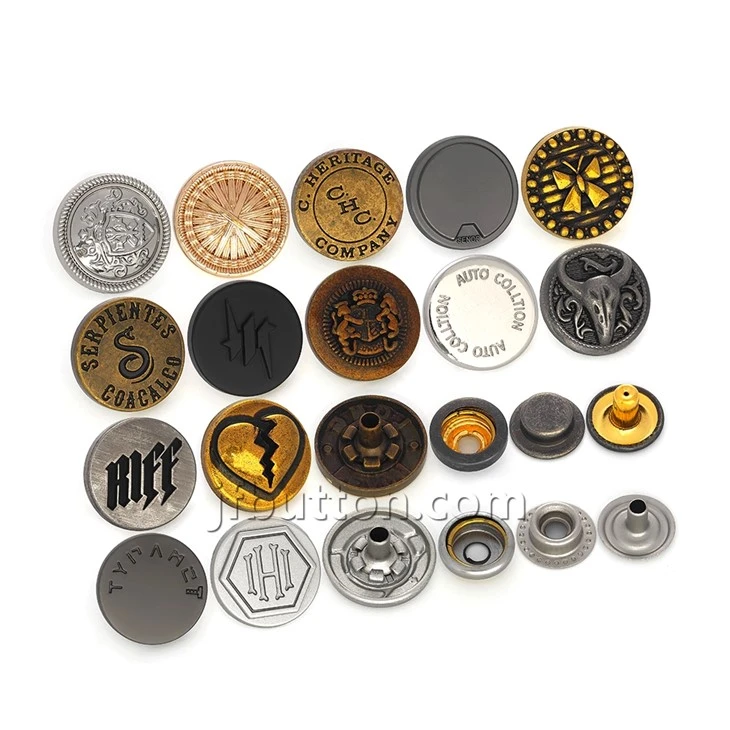
For customized snap buttons, our engineers design precision molds according to customer drawings, logo requirements, and product dimensions.
This stage typically includes:
CAD design
3D modeling
Mold machining
Trial mold testing
Accurate molds ensure every component maintains consistent dimensions during mass production.
Step 3: Metal Stamping or Plastic Injection Molding
The forming process depends on the button material.
For Metal Snap Buttons
Metal sheets or wire are processed using high-speed stamping machines or die-casting equipment to produce individual components such as caps, sockets, studs, and posts.
For Plastic Snap Buttons
Plastic pellets are melted and injected into precision molds through injection molding machines, producing lightweight snap button parts with consistent dimensions.
Modern automated equipment improves production efficiency while minimizing dimensional variations.
Step 4: Trimming and Deburring
After forming, each component undergoes trimming to remove excess material and sharp edges.
This process improves:
Dimensional accuracy
Assembly precision
User safety
Product appearance
Smooth edges also help protect delicate fabrics from damage during use.
Step 5: Polishing
Polishing enhances both the appearance and surface quality of snap button components.
Depending on the product requirements, manufacturers may use:
Mechanical polishing
Vibratory polishing
Mirror polishing
Proper polishing creates a smooth surface that improves coating adhesion and provides a premium finish.
Step 6: Electroplating and Surface Finishing
Surface treatment is one of the most important steps in snap button manufacturing.
It not only enhances appearance but also improves corrosion resistance and wear performance.
Common finishes include:
Nickel
Matte Nickel
Gold
Antique Brass
Antique Copper
Gunmetal
Black Nickel
Matte Black
Satin Finish
PVD Coating
Professional manufacturers carefully control plating thickness and color consistency to ensure every production batch matches customer specifications.
Step 7: Assembly
After all individual parts are completed, automated or semi-automated assembly machines combine the four components into complete snap button sets.
During assembly, manufacturers verify:
Proper alignment
Snap engagement
Locking force
Smooth opening and closing
Accurate assembly ensures consistent fastening performance across large production volumes.
Step 8: Quality Inspection
Quality control is carried out throughout the manufacturing process rather than only at the end.
Typical inspections include:
Dimensional Inspection
Verifies component dimensions meet design specifications.
Appearance Inspection
Checks for scratches, dents, color variations, and plating defects.
Snap Function Test
Ensures proper locking performance and smooth operation.
Pull Force Test
Measures the fastening strength to confirm durability under repeated use.
Salt Spray Test
Evaluates corrosion resistance for plated metal snap buttons.
Coating Adhesion Test
Verifies the durability of electroplated or coated surfaces.
Step 9: Packaging and Shipment
Once the products pass all inspections, they are packaged according to customer requirements.
Packaging options may include:
Bulk packaging
Polybags
Custom printed bags
Barcode labels
Retail packaging
Export cartons
Proper packaging protects the snap buttons during transportation and ensures efficient inventory management upon arrival.


High-quality snap buttons are the result of premium materials, precision manufacturing, advanced surface finishing, and rigorous quality control. Choosing a professional manufacturer ensures reliable fastening performance, consistent product quality, and customized solutions for a wide range of garment applications.
If you're looking for a trusted partner for custom snap buttons, metal snap buttons, or OEM garment accessories, kunshuo offers over 20 years of manufacturing experience, flexible customization services, and dependable production capabilities. Contact us today to discuss your project and discover the right snap button solution for your brand.