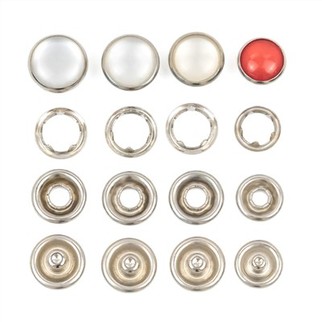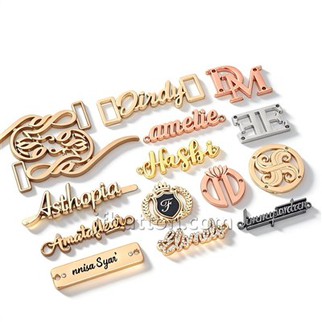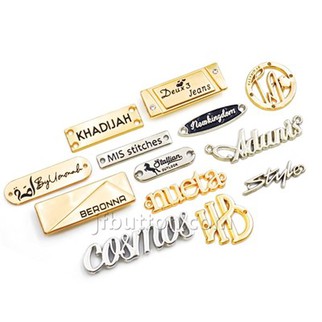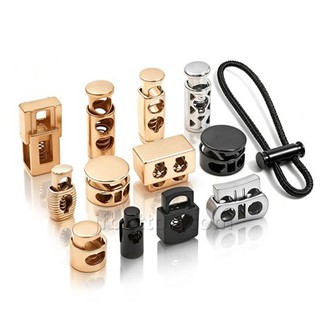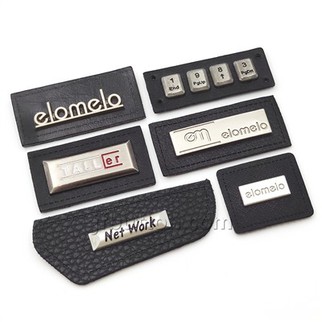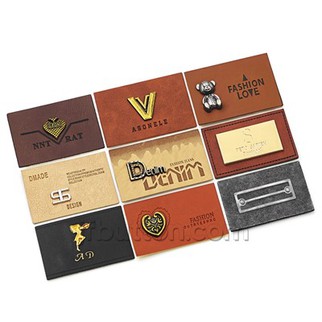
Today, brand promotion is no longer limited to simply printing logos or attaching woven labels. An increasing number of apparel brands are now adopting custom metal tags to cultivate a premium aesthetic and reinforce their brand image. Unlike traditional fabric labels, metal apparel tags offer a distinctive texture, a high-end appearance, and exceptional durability. With their polished surfaces, engraved brand logos, and custom shapes, these tags can be fully personalized to align perfectly with a brand's unique style. Custom metal brand plates are now widely utilized across various sectors, including designer apparel, denim, footwear, bags, and outdoor clothing.
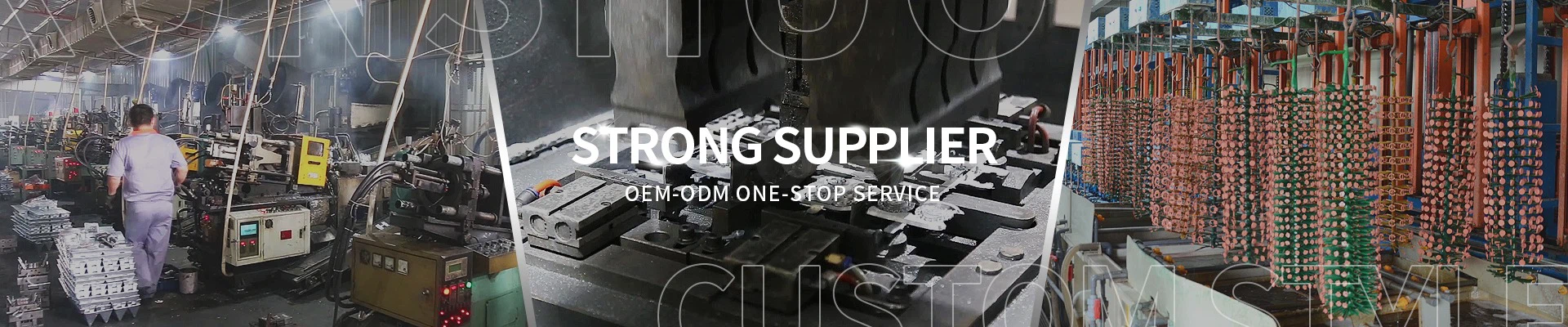
As a leading manufacturer of metal clothing labels in China, Kunshuo is dedicated to meeting your specific needs-whether you are an emerging fashion startup, a denim brand, or a large-scale garment manufacturer-by providing fully personalized customization solutions.
Types of Metal Labels for Clothing
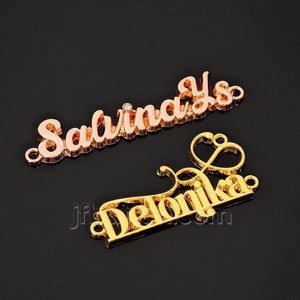
The manufacturing processes, materials, and surface finishing techniques for metal clothing tags are highly diverse. You can select the most suitable metal tag based on the complexity of the design, the garment category, production costs, and your brand positioning. Kunshuo offers comprehensive, one-stop tag customization services, providing bespoke solutions for the following types of tags:

Die-Cast Metal Labels (3D Logo Plates)
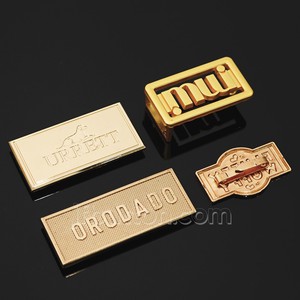
Die casting is one of the most common manufacturing methods for metal labels. Based on your design artwork, we produce these labels by injecting molten metal into a custom mold, creating a 3D or raised effect for your logo.
Stamped Metal Labels (Flat Pressed Style)
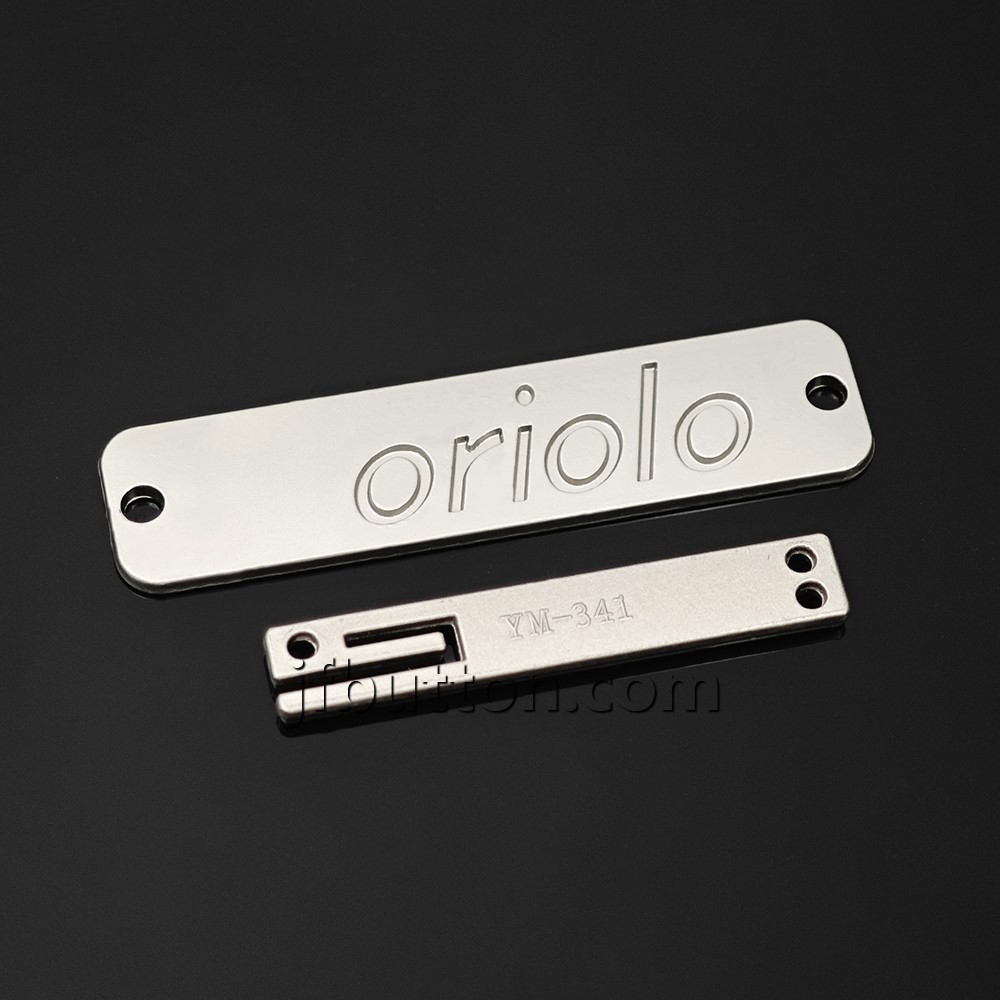
Stamping involves pressing metal sheets using a die to create a recessed or raised effect for your logo. This processing technique is relatively simple, making it suitable for minimalist brands and those with limited budgets.
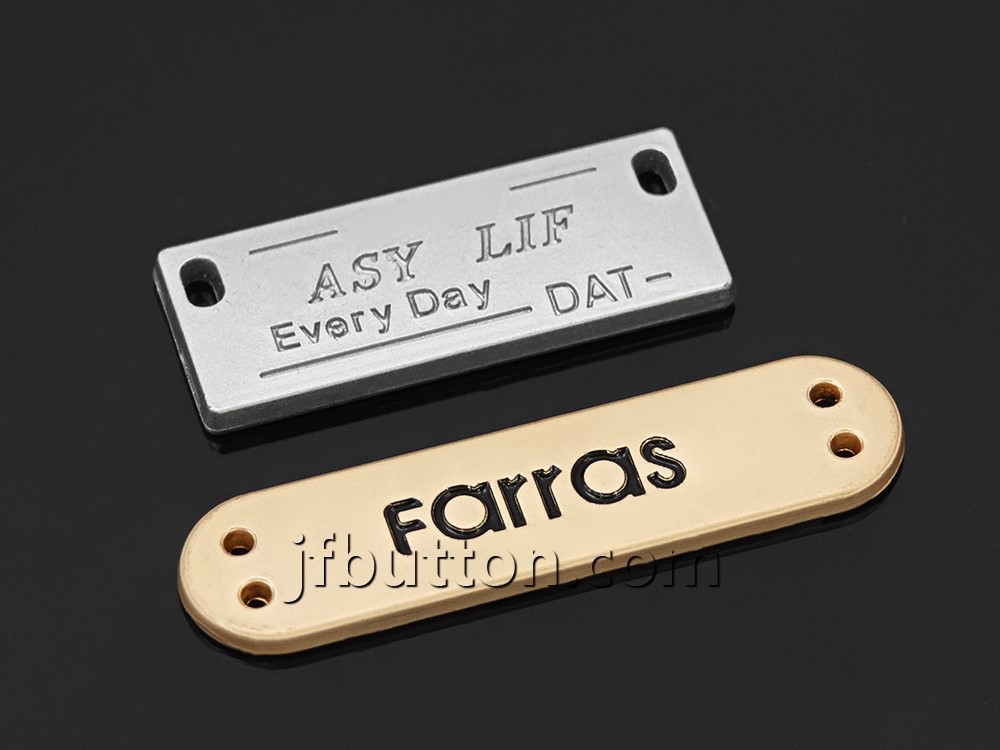
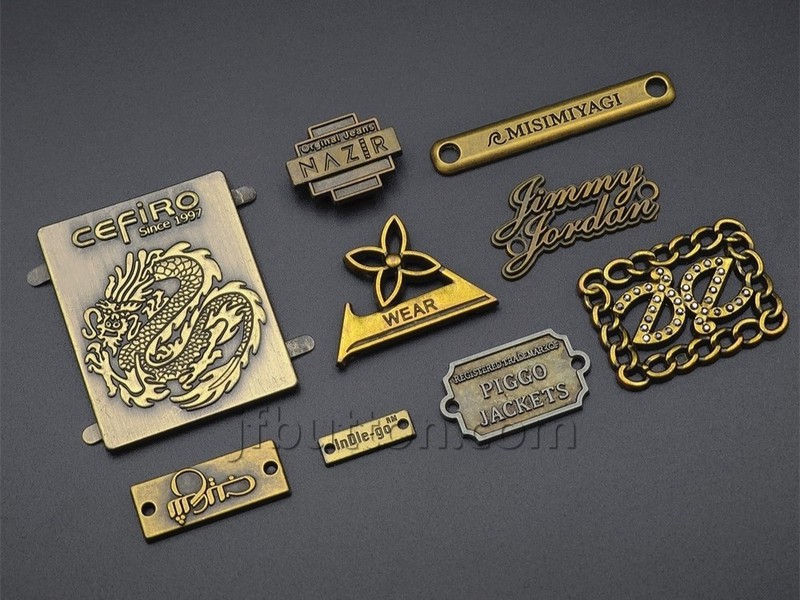
Engraved Metal Labels (Laser or CNC Precision)
The engraving process involves using lasers or CNC machinery to directly carve your logo onto a metal surface. These labels offer high precision and durability, making them particularly suitable for applications requiring custom serial numbers or QR codes.
Embossed & Debossed Metal Labels (Textured Branding)
Embossed labels feature raised designs, while debossed labels have recessed patterns pressed into the surface.
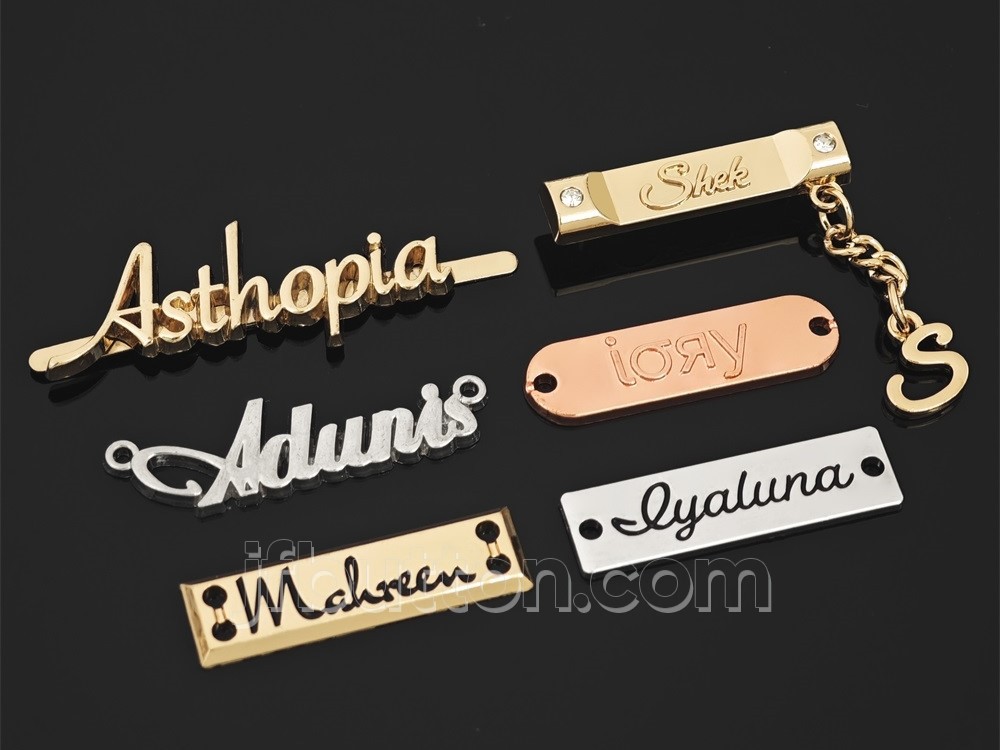
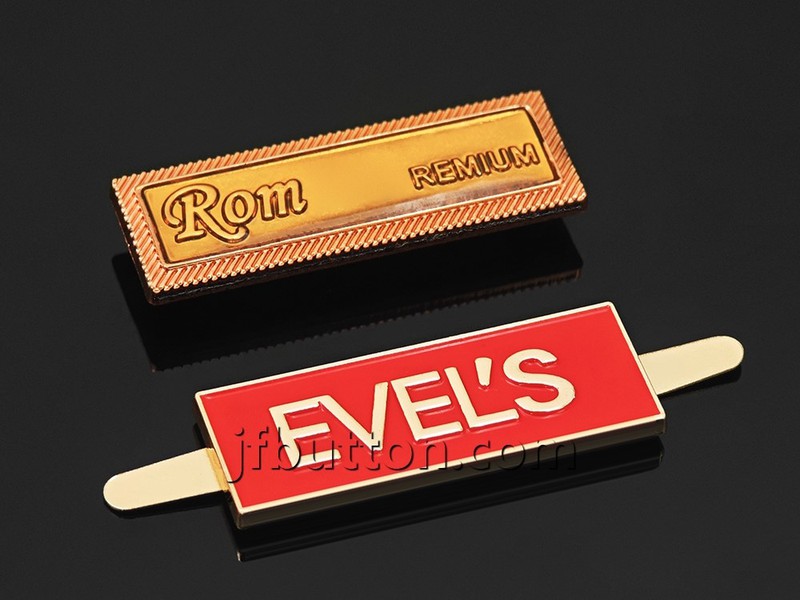
Enamel-Filled Metal Labels (Color Branding Type)
The surfaces of enamel metal labels are typically filled with colored resin or enamel, making them ideal for stylish logos that rely on color recognition. We offer customization using colors from the Pantone color chart and also support custom orders based on provided samples.
Cut-Out / Hollow Metal Labels (Laser-Cut Style)
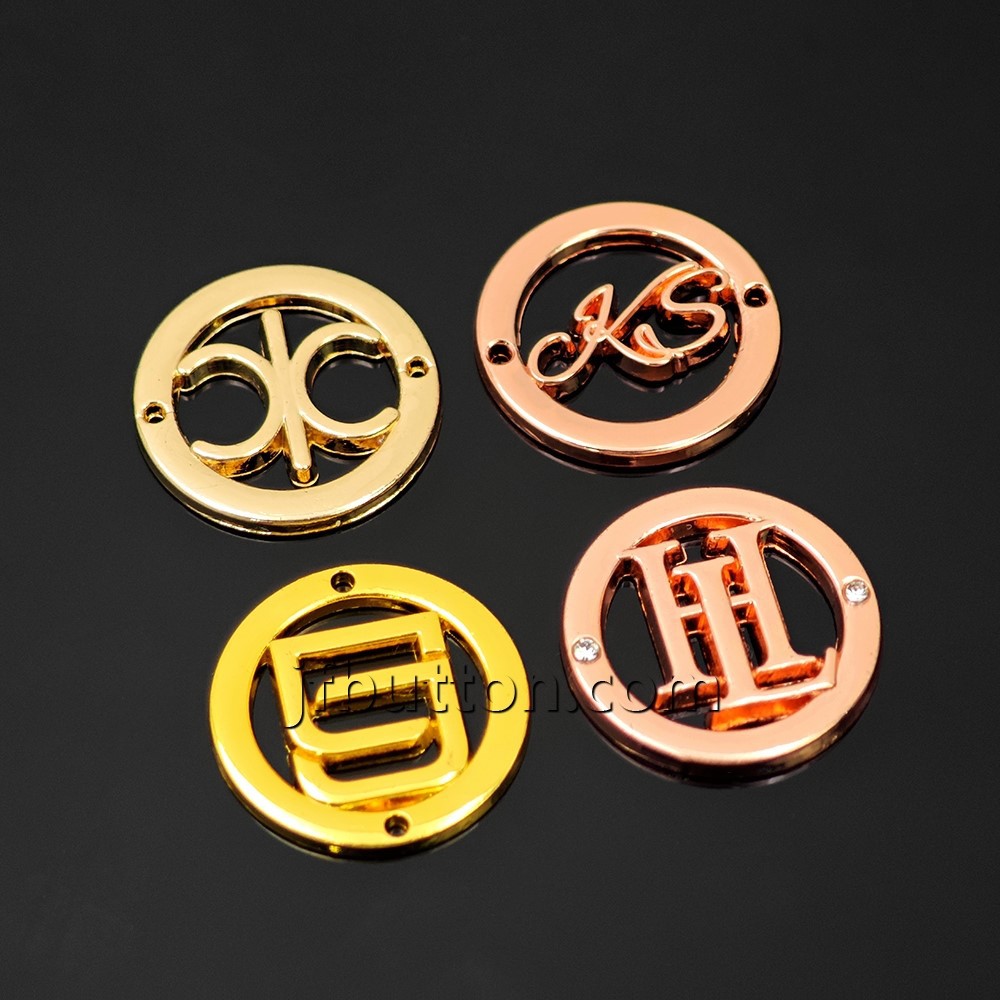
Openwork metal tags are produced by directly laser-cutting shapes or logos into a metal plate, making them particularly suitable for brands with letter-based logos.
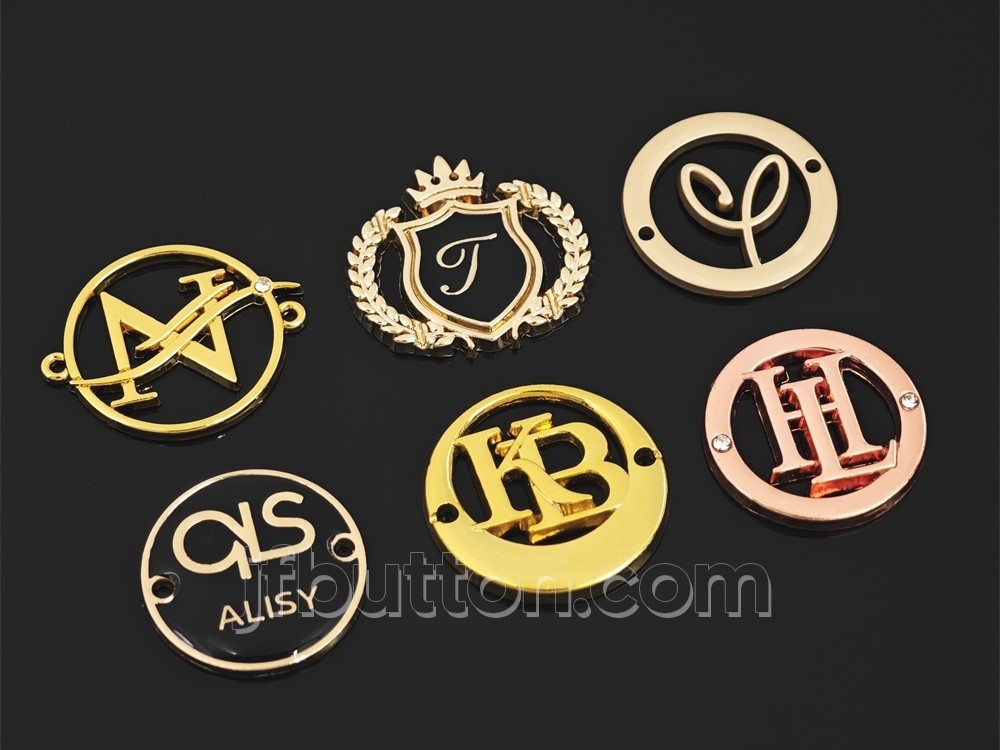
We offer metal labels featuring a wide variety of finishing processes, which can be fully customized to meet your specific requirements. For expert advice on custom labeling or logo design, please click below to contact our team immediately and receive a personalized proposal and samples.
Materials for Metal Clothing Labels
When customizing metal labels, the choice of material directly impacts the label's appearance, durability, weight, corrosion resistance, and overall brand image. Below, we introduce the materials available for our custom metal apparel labels, outlining the advantages and limitations of each option to help you make the best choice for your labels.
|
Material |
Durability |
Weight |
Cost Level |
Visual Style |
Best Use |
|
Zinc Alloy |
High |
Medium |
Medium |
Flexible (any plating) |
General fashion branding |
|
Stainless Steel |
Very High |
Medium-High |
High |
Modern & clean |
Outdoor & premium apparel |
|
Brass |
High |
Heavy |
High |
Luxury vintage |
Designer & luxury brands |
|
Aluminum |
Medium |
Very Light |
Low-Medium |
Minimal & functional |
Sportswear & casual brands |
|
Copper |
Medium |
Medium |
High |
Artistic & unique |
Boutique fashion |
Popular Surface Finishes & Plating Options
We offer a variety of surface finishing processes for metal labels to meet the diverse stylistic needs of different brands. The following are some common label finishing techniques:
Electroplating
Through an electrochemical process, electroplating applies a layer of metal-in various colors-onto the surface of the base metal. Common finishes include Gold plating, Silver plating, Gunmetal, Rose gold, and Nickel plating.
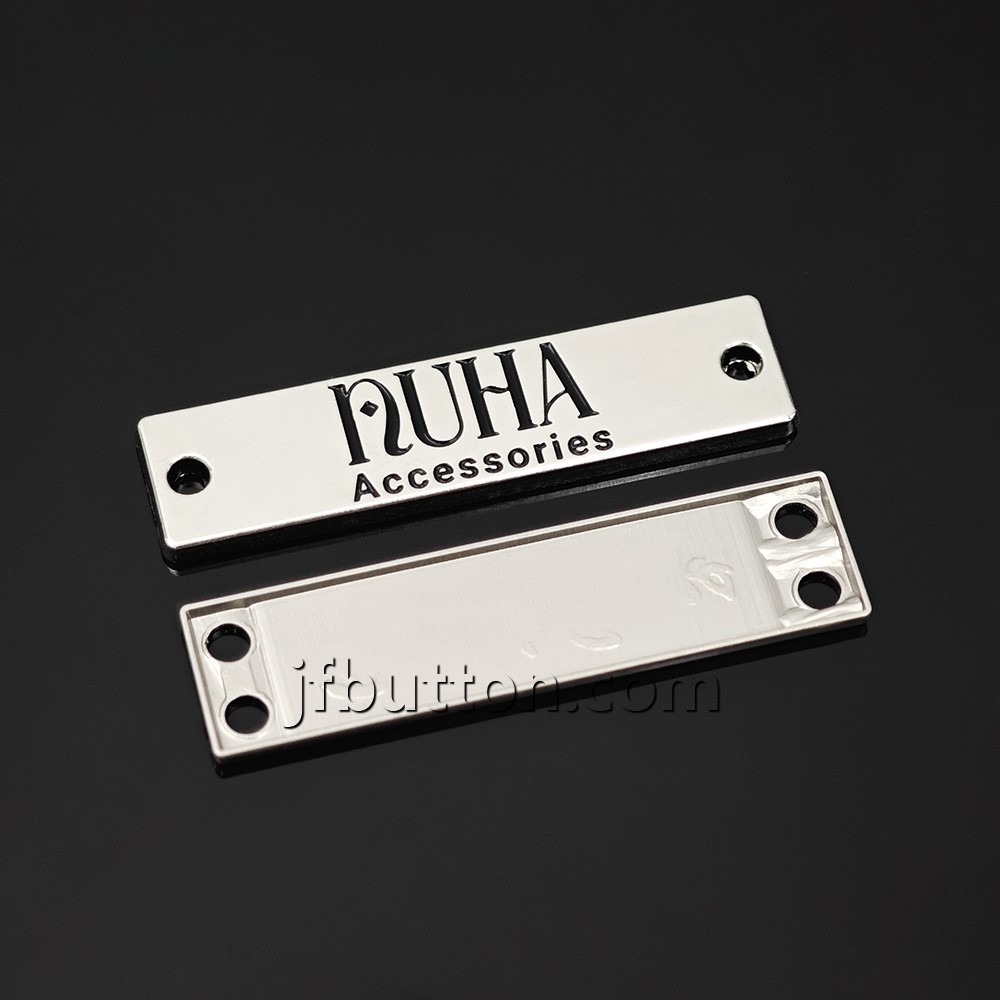
Brushed Finish
Brushed finishing involves creating fine directional lines on the metal surface to produce a textured, satin-like appearance.
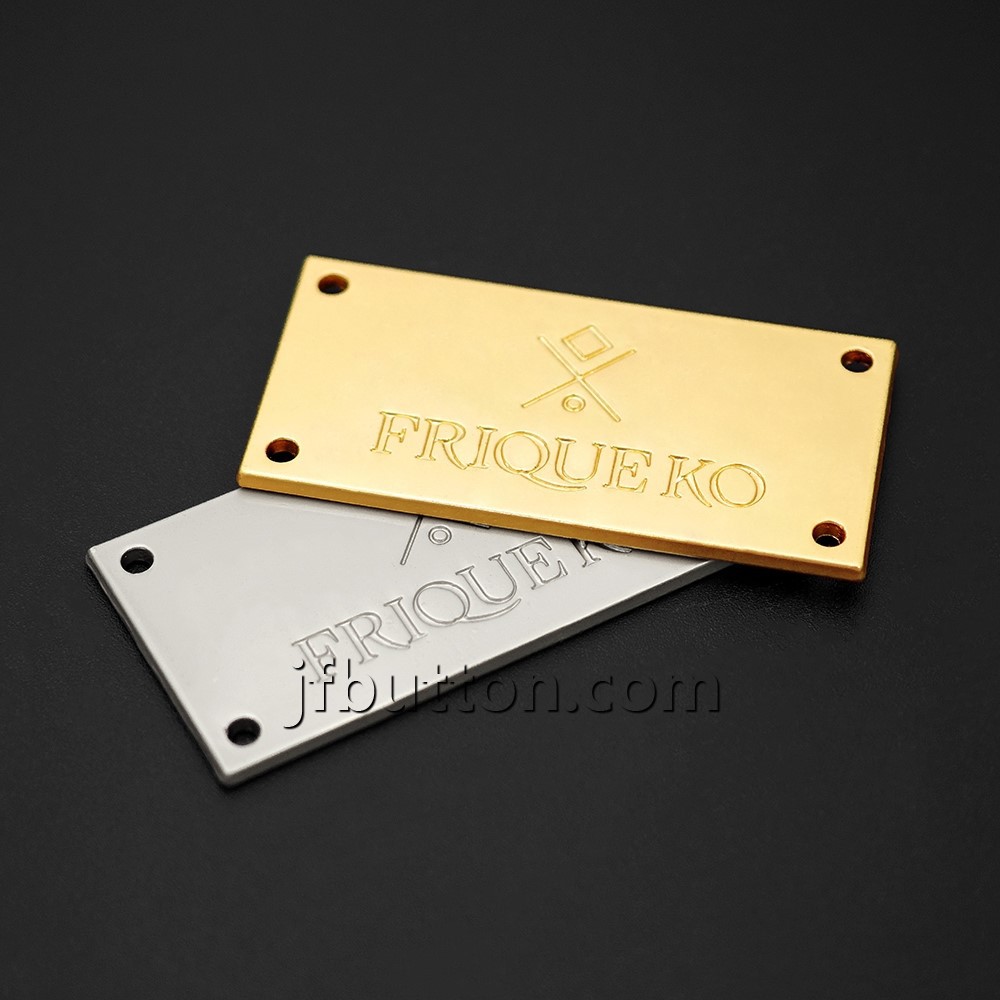
Matte Finish
Matte finishing removes the gloss, creating a smooth, non-reflective surface on the metal label.
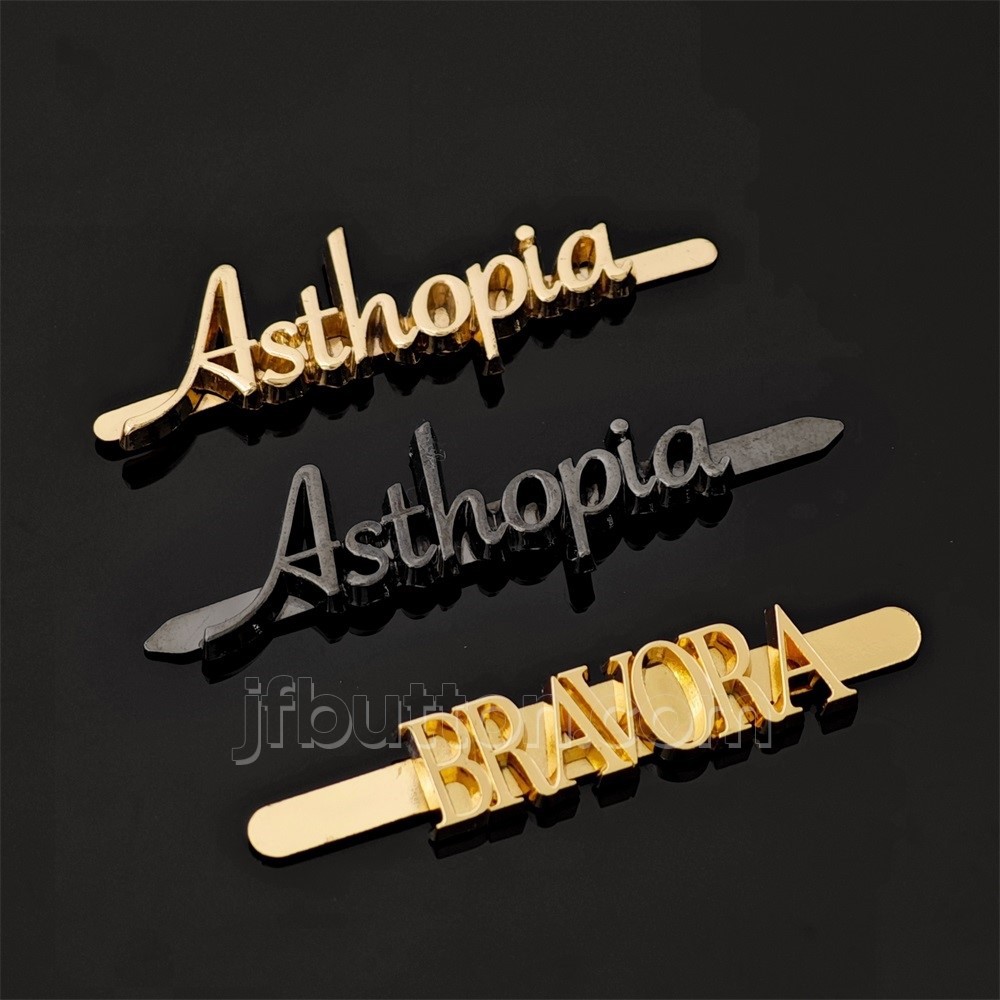
Antique Finish
Cowers Commercial Cleaning Robot Landing Case:China Mobile Software Park
Attachment Methods for Metal Labels on Clothing
The attachment method of a metal label is just as important as its material or finish. It determines how securely the label stays on the garment, how it performs during washing and wearing, and how suitable it is for different fabric types.
We offer the following methods for securing labels:
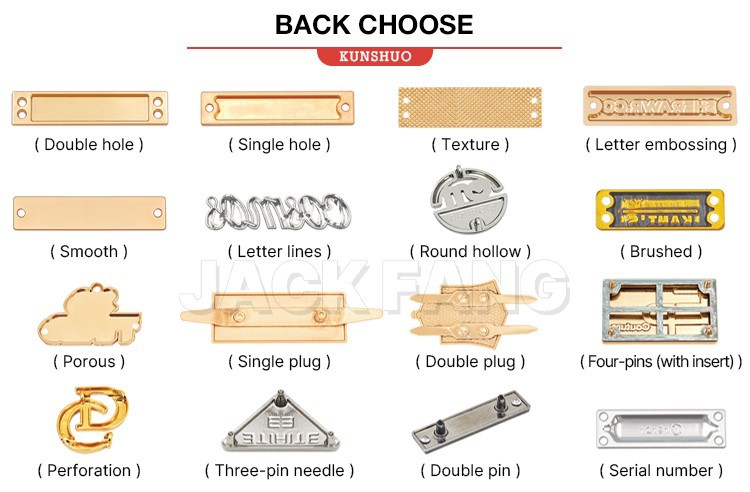
- Sew-On Metal Labels
Sew-on metal labels are designed with small holes or slots around the edges, allowing them to be stitched directly onto fabric using thread.
- Rivet Metal Labels
Rivet attachment uses metal studs to permanently secure the label onto the garment, often through fabric and leather layers.
- Screw-Back Metal Labels
Screw-back labels use small screws and threaded posts to attach metal plates securely to garments or accessories.
- Adhesive Back Metal Labels
Adhesive-backed metal labels come with a strong industrial glue layer that allows direct application onto flat surfaces.
- Heat-Press Metal Labels
Heat-press methods combine adhesive layers with heat activation to bond metal labels to fabric.
- Magnetic Metal Labels
Magnetic labels use embedded magnets to attach metal plates without damaging fabric.
Selecting the correct fixing system depends on garment type, usage environment, and brand positioning.
1. Fabric Type Consideration
Denim → Rivet or Sew-on
Leather → Rivet or Screw-back
Knitwear → Sew-on or Heat-press
Sportswear → Heat-press or Adhesive
2. Durability Requirements
High durability → Rivet / Screw-back
Medium durability → Sew-on / Snap
Temporary use → Adhesive / Magnetic
3. Brand Positioning
Luxury fashion → Screw-back / Rivet
Streetwear → Rivet / Snap
Minimalist fashion → Heat-press / Sew-on
OEM & ODM Customization Options
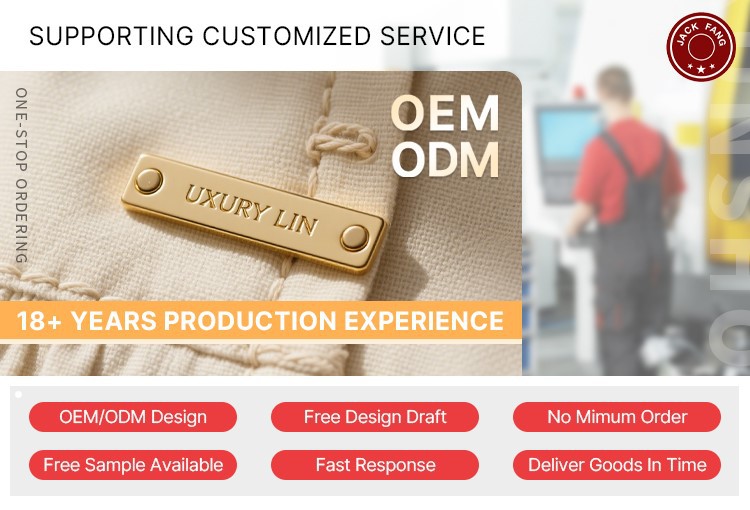
To meet the requirements for brand differentiation, we offer the following customization options:
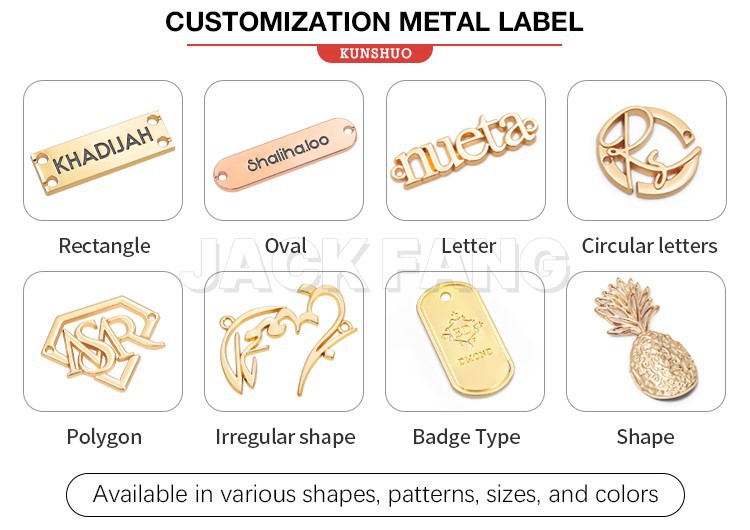
Custom Shapes & Structural Design Options
Common Custom Shapes:
Rectangular nameplates / Circular logo badges
Shield or crest designs / Geometric modern shapes
Irregular artistic outlines
Advanced Structural Options:
3D raised logo effects / Hollow cut-out designs
Multi-layer metal structures / Mixed material combinations (metal + leather + enamel)
Custom Size, Thickness & Weight Control
Sizing is critical for ensuring compatibility with different garments and maintaining aesthetic balance.
Fully adjustable dimensions (length, width, thickness)
Lightweight options for sportswear
Heavy-duty options for denim and leather goods
Micro-label production for luxury minimal branding
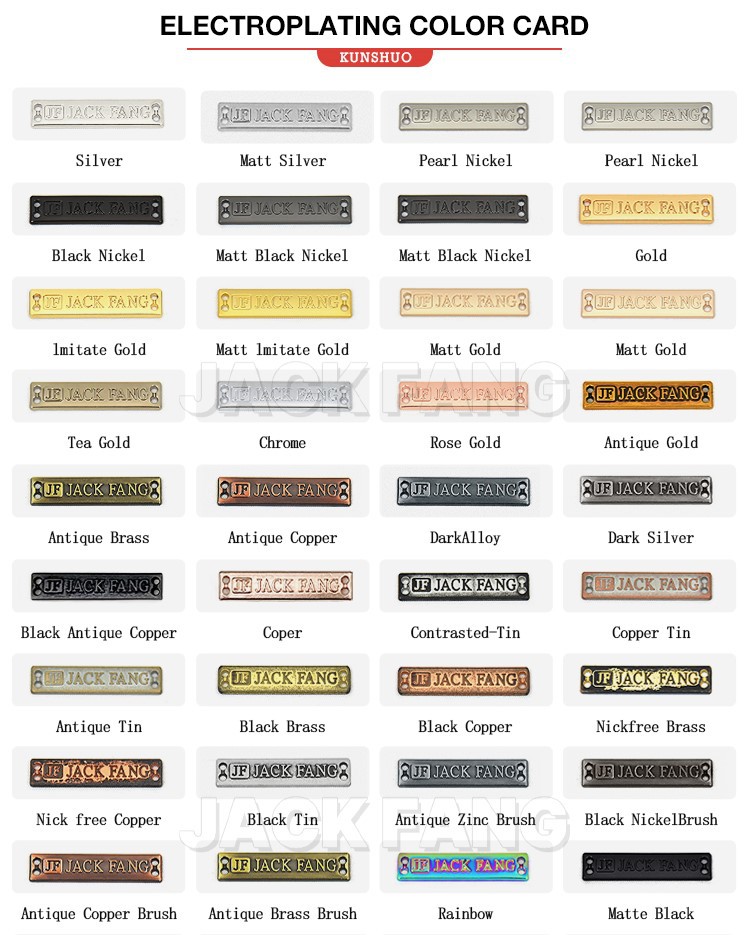
Custom Surface Finishes & Color
Color and finish customization is one of the most powerful branding tools in metal label production.
Available Options:
Gold, silver, rose gold plating
Gunmetal and matte black finishes
Antique vintage effects
Brushed or polished textures
Dual-tone plating combinations
Advanced Color Matching:
Pantone color matching system
Brand identity color replication
Gradient or layered plating effects
Enamel color filling customization
Now that you are familiar with the common types of metal labels, customization options, and more-are you ready to create exclusive metal labels for your brand? Send us your design artwork today to receive samples and a quotation.
FAQ
What are metal labels for clothing used for?
Metal labels are used for brand logos, decoration, and identification on garments like jeans, jackets, bags, and hats. They help create a more premium and durable brand image compared to fabric labels.
Are metal clothing labels washable?
Yes. High-quality metal labels are washable, especially when made with proper plating and secure attachment methods like rivets or sewing. Stainless steel and well-coated zinc alloy perform best.
Do metal labels rust or fade?
Good-quality metal labels do not easily rust or fade. Stainless steel is the most resistant, while plated zinc alloy also performs well when properly coated. Poor plating quality is the main cause of fading.
What is the MOQ for metal labels?
MOQ usually ranges from 300 to 1000 pieces, depending on design complexity. Simple designs require lower MOQ, while complex 3D molds require higher quantities.
How long does production take?
Typical timeline:
Sample: 5–10 days
Mass production: 10–25 days
Total lead time is usually around 2–4 weeks.
Are metal labels safe for skin?
Yes. High-quality labels use smooth edges and safe plating to avoid irritation. Nickel-safe coatings are commonly used for skin-contact garments.