As global consumer focus on Carbon Footprint continues to rise, major luxury groups and fast-fashion brands have expanded their sustainable supply chain choices to include organic cotton, recycled polyester, and metal hardware accessories.
Traditional electroplating processes for metal buttons, zipper sliders, and metal buckles often hide residual risks of highly toxic substances such as Hexavalent Chromium or Cyanide, which can impact human health through long-term wear. The emergence of eco-friendly electroplating has made hardware accessories safer. We will now explore how global regulatory bodies, such as the EU's REACH, have utilized strict legal measures to compel technical iterations within the accessory processing industry.
Why Traditional Electroplating is Becoming Untenable
Traditional electroplating has long relied on two major toxins: Hexavalent Chromium and Cyanide.
Hexavalent Chromium: It is a recognized Class I carcinogen and can easily trigger severe skin allergies, such as contact dermatitis. For accessories in high-frequency contact with skin, such as buttons and zippers, Hexavalent Chromium poses a significant health threat.
Cyanide: A highly toxic substance whose production wastewater, if improperly treated, can have a devastating impact on aquatic ecosystems.
Consequently, with increased environmental awareness and the enactment of global regulatory restrictions, traditional electroplating enterprises must improve their processes to produce hardware accessories that meet environmental requirements
The Three Global Regulatory Benchmarks
To ensure the safety of metal accessories, the global market has established a highly stringent regulatory system
1.EU REACH Regulation (SVHC List): REACH is currently the most complex chemical management regulation in the world. Within it, various electroplating additives, including Hexavalent Chromium, are listed as Substances of Very High Concern (SVHC). If these substances in accessories exceed 0.1% (w/w), companies must fulfill complex notification obligations or lose access to the EU market.
2. RoHS Directive: Although RoHS initially targeted electronic products, its limit standards for lead, cadmium, mercury, and Hexavalent Chromium have become the general industry baseline for garment hardware, especially fasteners with metal coatings
3. OEKO-TEX® Standard 100: Known as the "Green Passport" of the garment industry, it sets requirements for Nickel Release and heavy metal residues in metal accessories that far exceed national laws. This certification serves as the highest-level safety endorsement in the global eco-textile field.
Trivalent Chromium
The core difference of Trivalent Chromium electroplating lies in its chemical valence. Compared to the extreme toxicity and carcinogenicity of Hexavalent Chromium, the toxicity of Trivalent Chromium is only 1/100 as much, and it is easily precipitated and removed during wastewater treatment. While it was previously believed that eco-plating lacked the brightness and hardness of traditional methods, breakthroughs in nanoscale electrolyte technology in 2026 have completely dispelled these biases.
Why the Garment Industry Prefers Trivalent Chromium
When processing complex hardware (such as irregularly shaped zipper sliders or hollow buttons), Trivalent Chromium demonstrates superior Throwing Power that traditional processes cannot match
Deep Coverage: Trivalent Chromium electrolytes possess excellent permeability, ensuring plating is uniformly distributed in button crevices and inner zipper edges. This avoids common traditional defects like "excessive thickness at edges" or "missing plating in recesses"
Physical Property Benchmarking: Modern Trivalent Chromium processes can achieve a microhardness of 600-900 HV, fully meeting the durability requirements for daily wear and the mechanical stress of garment accessories.
|
Indicator |
Traditional Hexavalent (Cr6+) |
Eco-Friendly Trivalent (Cr3+) |
Accessory Application Value |
|
Toxicity / Eco-friendliness |
Highly toxic, carcinogenic, difficult to treat |
Low toxicity, safe, easily degradable |
Mitigates REACH Regulation risks |
|
Throwing Power |
Poor (complex parts prone to exposed substrate) |
Excellent (uniform coverage) |
Increases yield for irregularly shaped hardware |
|
Color Appearance |
Bright silver with a slight blue tint |
Pure bright white or cool grey tones |
Aligns with high-fashion aesthetics |
|
Cathodic Efficiency |
Relatively high |
Relatively low (requires precise control) |
Tests the technical reserves of the factory |
Cyanide-Free Electroplating Processes
In traditional hardware processing, Cyanide Plating was once considered a "universal key" because it provided excellent coverage and allowed for secondary cleaning of the substrate before plating. However, sodium and potassium cyanides are lethal even in trace amounts, and high wastewater treatment costs are a primary reason for the closure of plating plants.
In the production of garment hardware (especially zinc alloy or brass substrates), Cyanide-free Plating is mainly applied to the copper pre-plating base layer and decorative gold plating surface.
Cyanide-Free Copper Plating (Base Layer): This process uses Pyrophosphate or HEDP (hydroxyethylidene diphosphonic acid) systems instead of cyanide copper. This "primer" layer determines the adhesion of all subsequent layers.
Cyanide-Free Gold Plating (Surface Finish): For high-end accessories, this process provides authentic 18K or 24K gold luster while completely eliminating chemical safety hazards during production.
Advancements in alkaline cyanide-free processes in 2026 have addressed adhesion concerns through optimized binder formulas, allowing finishes on zinc alloy to pass rigorous Cross-cut and Tape Pull tests. These processes deposit finer metal grains, providing a smoother physical foundation for subsequent bright nickel or Trivalent Chromium layers, thereby enhancing the overall visual quality of the accessories. Accessory buyers should ensure that their suppliers' copper pre-plating, imitation gold, and genuine gold plating have transitioned to cyanide-free methods
Performance Testing: Can Eco-Friendly Hardware Withstand "Extreme Tests"?
To verify the durability of Trivalent Chromium and cyanide-free electroplating, hardware accessories typically undergo simulations of extreme environments, including salt spray, perspiration, washing/dry cleaning, and abrasion tests.
|
Test Project |
Industry Entry Standard |
Eco-Plating Actual Performance |
Conclusion |
|
Neutral Salt Spray (NSS) |
24 Hours |
72 - 144 Hours |
Far exceeds maritime storage requirements |
|
Adhesion (Cross-cut) |
1B |
4B - 5B |
Coating is extremely difficult to peel |
|
Abrasion Resistance |
500 Cycles |
2000+ Cycles |
Excellent durability |
|
Heavy Metal Content |
Compliance required |
ND (Not Detected) |
Perfectly aligns with REACH/RoHS |
Customized Solutions for Different Garment Accessories
Eco-friendly electroplating involves more than just chemical changes; it requires precise matching based on the substrate (e.g., zinc alloy, brass, stainless steel) and the usage scenario.
1. Zippers and Sliders
The difficulty in plating zippers lies in the frequent friction between the slider and the teeth.
Pain Point: Traditional coatings that are too thick or brittle can lead to poor sliding or "flaking".
Solution: Utilize Trivalent Chromium Barrel Plating combined with specialized self-lubricating sealants.
Advantage: This ensures sliders pass ISO 20206 reciprocating tests without wear or jamming, while the cyanide-free base layer provides the toughness needed to prevent teeth from cracking when bent.
2. Metal Buttons
Buttons are the metal components with the highest frequency of skin contact, especially on undergarments and denim.
Pain Point: Nickel allergy is the leading cause of complaints regarding metal accessories.
Solution: Nickel-free Trivalent Chromium Electroplating.
Advantage: By replacing the nickel layer with white bronze (tin-copper alloy) as the intermediate layer, products meet the strict OEKO-TEX Standard 100 Appendix 4 for skin-contact metal parts. This is a critical technical barrier for high-end and infant wear.
3. Luggage Buckles and Chains
These accessories (e.g., D-rings, snap hooks) are usually larger and exposed to outdoor elements.
Pain Point: Salt spray corrosion and atmospheric oxidation.
Solution: Trivalent Black Chrome / Thick Nickel eco-plating combined with vacuum electrophoretic sealing.
Advantage: This "double protection" provides a deep metallic texture and achieves an NSS rating of 144+ hours, effectively handling high-salinity risks during long-distance maritime transport.
4. Metal Tags and Charms
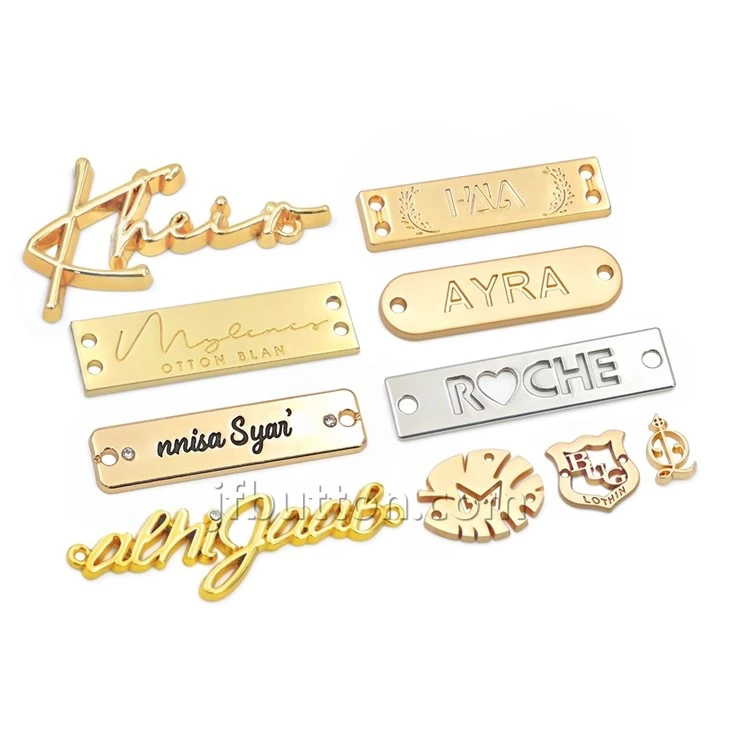
Solution: Cyanide-free imitation or genuine gold plating.
Value: This produces highly uniform Light Gold or Rose Gold colors for logo tags, ensuring no color variation across batches and enhancing brand prestige
|
Accessory Category |
Core Substrate |
Recommended Eco-Process |
Core Concern |
|
Metal Zippers |
Brass / Zinc Alloy |
Cyanide-free Copper + Trivalent Chromium |
Smoothness of reciprocating action |
|
Tack/Denim Buttons |
Zinc Alloy / Steel |
Nickel-free + Trivalent White Chrome |
Skin-friendliness and washability |
|
D-Rings / Hooks |
Zinc Alloy / Cast Aluminum |
Thick Eco-coating + Advanced Sealing |
Salt spray resistance and load capacity |
|
Metal Labels |
Zinc Alloy / Copper |
Cyanide-free Gold / Imitation Gold |
Color consistency and retention |

Zipper

Metal Button

Bag Hardware
Metal Label
Small as they are, garment accessories are the most tangible touchpoints for a brand's environmental commitment.
By adopting Trivalent Chromium and cyanide-free electroplating, suppliers and brands are transitioning from "end-of-pipe treatment" to "source prevention".
If you are a brand buyer or designer, please verify the following three points when choosing eco-friendly hardware:
Review Reports: Does the supplier have the latest Trivalent Chromium testing and cyanide-free production certifications?
Test Performance: Does the salt spray resistance meet the high industry standard of 48+ hours?
Audit Systems: Does the factory have a complete Closed-loop System for wastewater?
Every tiny metal accessory is a carrier of brand values. Choosing Trivalent Chromium and cyanide-free electroplating means choosing more than just advanced technology-it means choosing a cleaner, safer future.